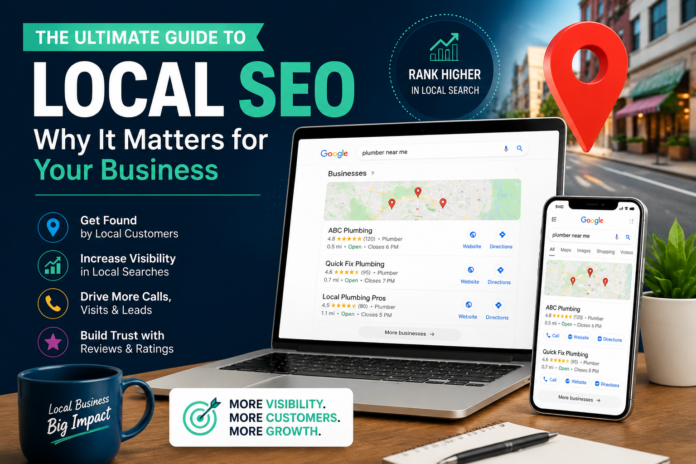
The Ultimate Guide to Local SEO: Why It Matters for Your Business
When people need a service today, they usually do not open a phone book or ask several friends for recommendations first. They search online.
Someone looking for a dentist, plumber, lawyer, restaurant, or marketing agency will often search phrases like:
- “dentist near me”
- “best plumber in Phoenix”
- “local SEO company near me”
- “emergency repair service open now”
The businesses that appear at the right moment are the ones that get the calls, website visits, and customers.
This is where Local SEO becomes important.
Local SEO helps businesses improve their visibility in location-based searches so potential customers can find them when they are actively looking for their services. It is not only about ranking a website. It is about making sure Google understands who you are, what you offer, where you operate, and why customers should trust you.
For small and local businesses, strong local visibility can be the difference between being discovered by new customers or being ignored while competitors take those opportunities.
What Is Local SEO?
Local SEO (Local Search Engine Optimization) is the process of improving your online presence so your business appears in searches related to your location and services.
For example, when someone searches:
“best coffee shop near me”
Google does not simply show the most popular coffee shops in the world. It tries to show businesses that are:
- Close to the searcher
- Relevant to the search
- Trusted by customers
- Clearly connected to that location
Unlike traditional SEO, which often focuses on ranking nationally or globally, Local SEO focuses on attracting customers from a specific area.
A business in Phoenix does not need to compete with every marketing agency in the world. It needs to become visible to people searching for marketing services in Phoenix and nearby areas.
That is why Local SEO is especially valuable for:
- Home service companies
- Medical practices
- Restaurants
- Law firms
- Real estate businesses
- Local retailers
- Professional service providers
Local SEO vs Traditional SEO
Traditional SEO and Local SEO share many principles, but their goals are different.
| Traditional SEOLocal SEO | |
|---|---|
| Targets a wider audience | Targets customers in specific locations |
| Focuses heavily on website rankings | Focuses on maps, local searches, and nearby customers |
| Uses content and backlinks as major signals | Uses GBP, reviews, citations, and location signals |
| Often targets informational searches | Often targets customers ready to buy |
A national website may want thousands of visitors from different countries.
A local business usually wants something more valuable:
A customer nearby who is ready to call, book, visit, or purchase.
Why Is Local SEO Important?
Consumer behavior has changed.
People no longer spend hours searching through different websites. They expect Google to quickly provide the best local options.
Local SEO matters because it helps businesses appear during these high-intent moments.
1. Customers Search Before They Buy
Many local searches happen when people already need a solution.
For example:
A homeowner searching “roof repair near me” is probably not just researching roofing. They may need someone to fix a problem today.
A person searching “emergency dentist open now” is likely looking for immediate help.
These searches have strong buying intent.
2. Google Maps Has Become a Major Customer Channel
For many local businesses, Google Maps is just as important as their website.
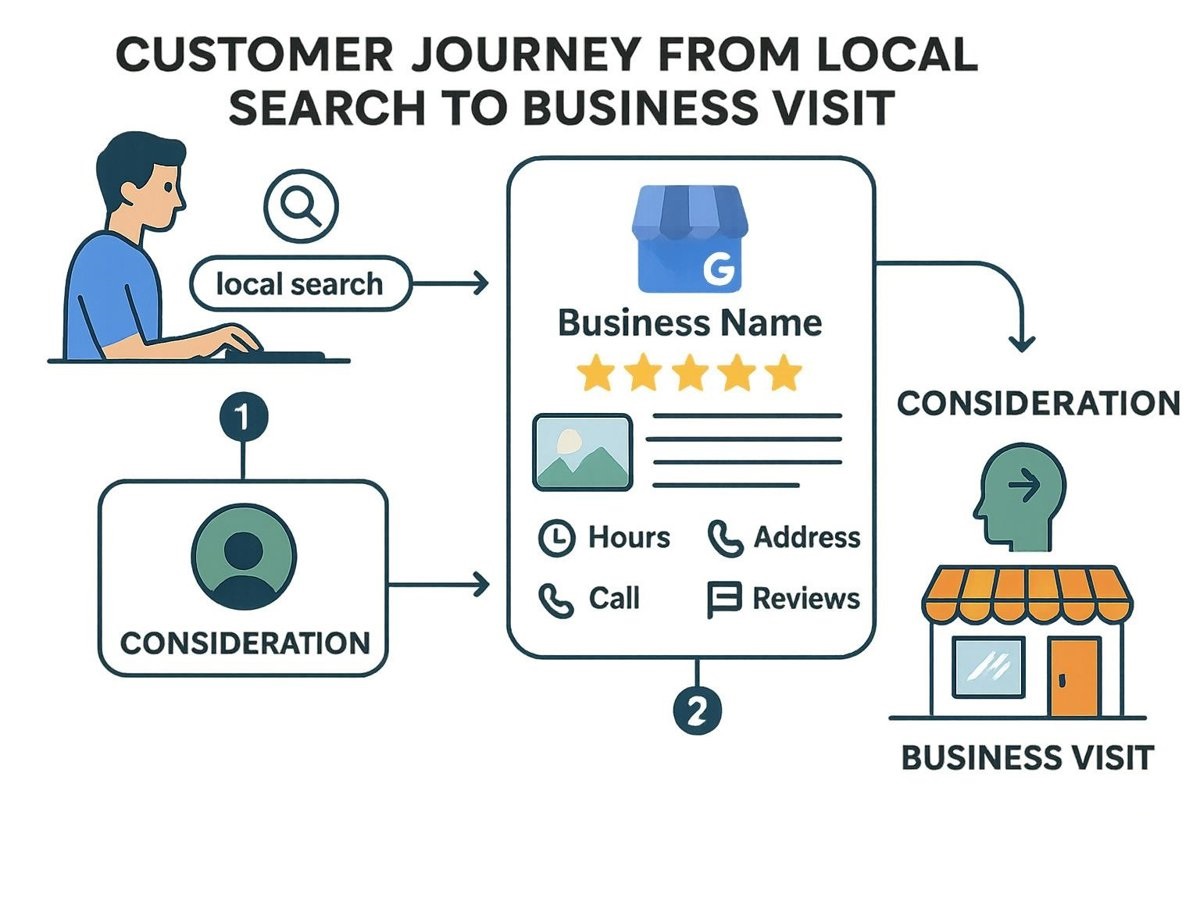
The Google Local Pack (the map results that appear at the top of many local searches) gives users important information immediately:
- Business name
- Location
- Reviews
- Phone number
- Website
- Directions
- Opening hours
If your business is missing from these results, customers may never discover you.
3. Local SEO Helps Small Businesses Compete
A small business usually cannot compete with large companies for broad national keywords.
For example:
Ranking for “insurance company” would be extremely difficult.
But ranking for:
“insurance company in Scottsdale”
is much more achievable with the right local strategy.
Local SEO allows smaller businesses to compete by focusing on their actual service areas.
Before vs After Local SEO
A business without Local SEO often struggles with visibility and customer acquisition.
Before Local SEO:
- Website receives little organic traffic
- Google Business Profile is incomplete
- Few customer reviews
- Incorrect business information across directories
- Competitors appear higher in search results
- Leads depend heavily on advertisements and referrals
After Effective Local SEO:
- Business appears in local search results
- Google Business Profile attracts more visitors
- Customers find accurate contact information
- Reviews build trust
- Website receives targeted local traffic
- More calls, bookings, and inquiries come from search
Local SEO does not create overnight success, but it builds a long-term customer acquisition system.
How Google Decides Which Local Businesses Rank?
Google does not rank local businesses randomly.
It evaluates many signals to decide which businesses provide the best answer for a search.
The main factors include:
Relevance
Google wants to understand whether your business matches what the customer is searching for.
For example, a bakery should clearly communicate:
- What products it sells
- Where it operates
- What makes it different
Clear information helps Google connect your business with relevant searches.
Distance
Location matters in Local SEO.
A customer searching for a restaurant usually wants options nearby, not a restaurant located hundreds of miles away.
Google considers the searcher’s location and the business location when showing results.
Trust and Reputation
Reviews are one of the strongest trust signals for local businesses.
A business with:
- Many positive reviews
- Recent customer feedback
- Professional responses
often appears more trustworthy to both customers and search engines.
The Role of Google Business Profile
Your Google Business Profile is one of the most important parts of Local SEO.
Think of it as your online storefront.
A properly optimized profile should include:
- Correct business name
- Accurate address and phone number
- Proper business category
- Complete services
- Business description
- Quality photos
- Updated hours
- Regular posts
- Customer reviews
Many businesses create a profile but never optimize it. This means they miss opportunities to appear for valuable searches.
Semantic SEO and Why Context Matters
Search engines have become much smarter.
Years ago, businesses could rank by repeating the same keyword many times.
Today, Google tries to understand meaning and context.
For example, a local SEO agency should not only mention “local SEO.”
It should also explain related topics such as:
- Google Business Profile optimization
- Local keyword research
- Review management
- Citation building
- Local landing pages
- Technical SEO
- Schema markup
This helps search engines understand the complete expertise of the business.
How AI and Search Technology Are Changing Local SEO
Search engines are increasingly using artificial intelligence to understand questions and provide better answers.
People are also searching in more conversational ways.
Instead of typing:
“SEO agency Phoenix”
someone might ask:
“Which SEO company in Phoenix helps small businesses get more Google Maps visibility?”
Modern Local SEO requires businesses to create clear, helpful information that answers real customer questions.
Businesses should focus on:
- Accurate information
- Helpful content
- Strong reviews
- Consistent business details
- Clear service descriptions
The Five Main Parts of a Successful Local SEO Strategy
1. Google Business Profile Optimization
A strong GBP strategy includes:
- Choosing the correct primary category
- Adding relevant services
- Uploading real business photos
- Publishing updates
- Responding to reviews
Your profile should clearly communicate what your business does.
2. Location-Based Website Content
Your website should support your local visibility.
Important elements include:
- Service pages
- Location pages
- Local keywords
- Customer testimonials
- Business information
Each page should provide real value instead of simply changing a city name.
3. Technical SEO
Technical problems can prevent search engines from understanding your website.
Important areas include:
- Fast loading speed
- Mobile-friendly design
- Proper schema markup
- Clear website structure
- Secure website connection
4. Reviews and Citations
Local businesses need strong reputation signals.
This includes:
- Getting genuine customer reviews
- Responding professionally
- Maintaining consistent business information across directories
Your business details should match everywhere online.
5. Local Link Building
Links from trusted local sources can strengthen your authority.
Examples include:
- Local organizations
- Business associations
- Community websites
- Local partnerships
- Industry-related websites
Local connections help search engines understand your presence in a specific area
How to Perform a Local SEO Audit
Before creating a strategy, businesses should review their current position.
A basic Local SEO audit should check:
Google Business Profile
- Is the profile complete?
- Are categories correct?
- Are there duplicate listings?
- Are reviews being managed?
Website
- Are location pages optimized?
- Are services clearly explained?
- Is the website mobile-friendly?
Citations
- Is business information consistent?
- Are important directories updated?
Competitors
Analyze:
- Who ranks in the map results?
- How many reviews do they have?
- What services do they highlight?
Understanding competitors helps identify opportunities.
Conclusion
Local SEO is no longer optional for businesses that depend on local customers.
People search online before choosing where to spend their money. If your business does not appear when customers are searching, your competitors will receive those opportunities instead.
A strong Local SEO strategy combines:
- Google Business Profile optimization
- Helpful local content
- Customer reviews
- Technical improvements
- Local authority building
The goal is simple:
Help the right customers find your business at the exact moment they need your services.